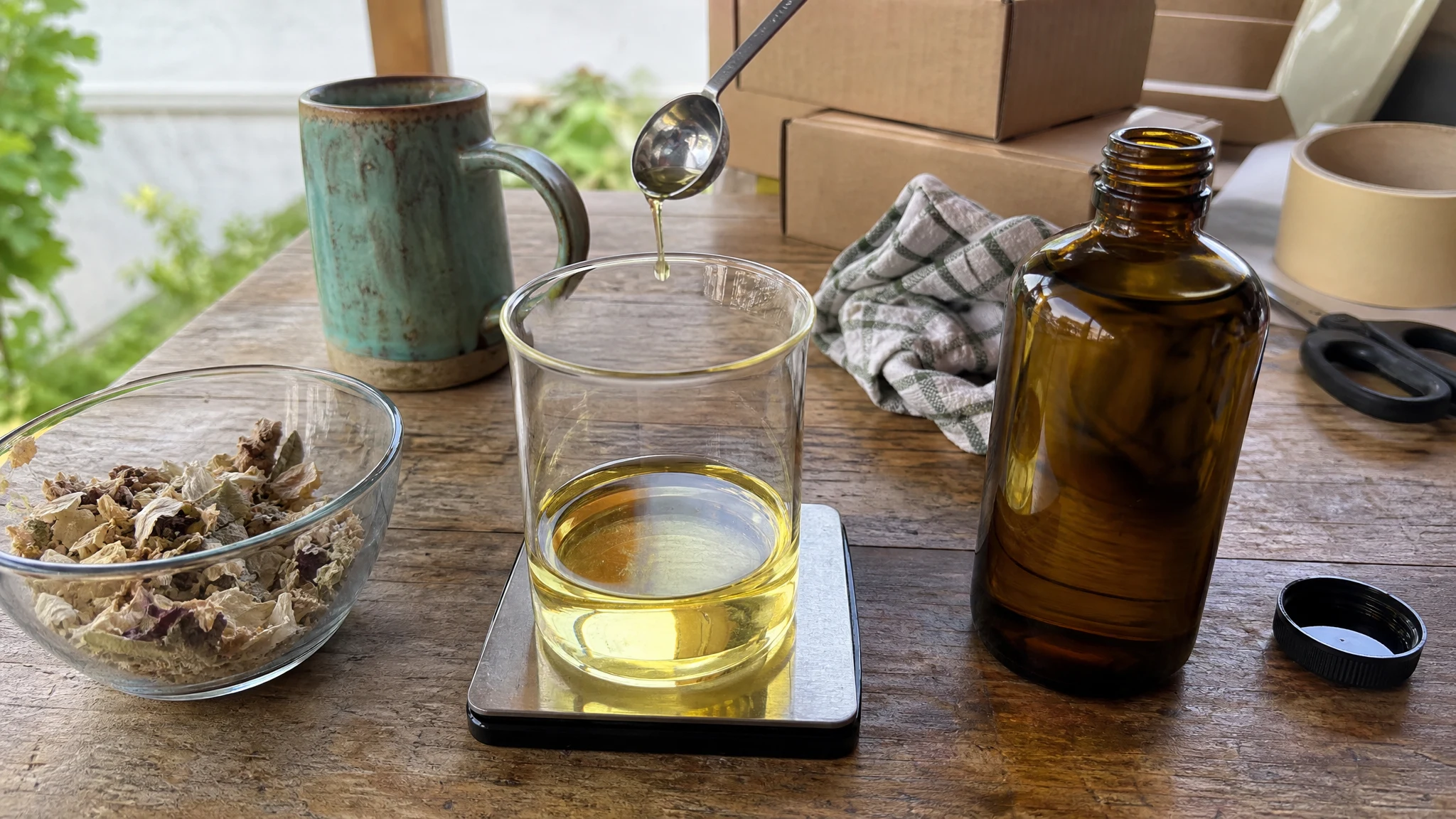
How to Use Labdanum Essential Oil Safely: A Dilution and Application Guide
Labdanum Essential Oil has a smoky, leathery, sweet scent, and a little goes a long way. It comes from Cistus ladanifer, a low Mediterranean shrub also called rockrose. Because the oil is concentrated and unusually thick, good habits matter from the first drop. This guide covers what you need, how to dilute, and how to enjoy the scent with confidence.
What You Are Working With
Labdanum Essential Oil is steam-distilled from the fragrant gum that forms on the leaves and twigs of Cistus ladanifer. Under summer heat, the shrub exudes a dark gum that clings to its surface. Steam distillation draws the aromatic oil out of that gum. The result is a viscous, amber-toned liquid with notes of leather, dried fruit and warm wood.
That thick body changes how you handle it. The oil pours slowly and can cling to the dropper. It also lingers, so perfumers use it as a base note. You rarely need much, which is one more reason to measure carefully.
Materials You Will Need
- Labdanum Essential Oil (browse the shop if you need a bottle)
- A carrier such as fractionated coconut oil, jojoba or sweet almond oil, or an unscented lotion base
- A clean glass bottle or jar with a tight lid
- A glass dropper or pipette
- A small bowl of warm water (to loosen the oil)
- A cotton pad or bandage for a patch test
- Labels and a pen
Dilution at a Glance
These figures use roughly 20 drops per milliliter, so they are close estimates. A lower percentage is a sensible place to begin, especially with a new oil.
| Dilution | Per 1 teaspoon (5 ml) carrier | Per 1 ounce (30 ml) carrier | Suggested use |
|---|---|---|---|
| 0.5% | about 1 drop | 3 drops | Very gentle starting point, sensitive skin |
| 1% | 1 drop | 6 drops | Everyday lotions and scented body oils |
| 2% | 2 drops | 12 drops | Perfume roll-ons and small, occasional uses |
Step-by-Step: How to Dilute and Apply
Step 1: Read the label and check your health situation
Confirm the bottle is pure Labdanum Essential Oil and note the botanical name, Cistus ladanifer. If you are under the care of a healthcare provider, take regular medication, or are unsure whether aromatics suit you, check with a qualified healthcare provider first. Keep the oil away from children and pets.
Step 2: Prepare a clean workspace
Wash your hands and your tools. Work on a surface you do not mind wiping down, since a thick resinous oil can leave a sticky residue. Keep the cap close at hand so you can close the bottle quickly.
Step 3: Loosen the oil gently
Labdanum can be slow to leave the bottle. Stand the closed bottle in warm (not hot) water for a few minutes. This thins it slightly and helps you count drops accurately. Never microwave it or place it near a flame.
Step 4: Measure your carrier first
Pour the carrier oil or unscented lotion into your clean container before adding any essential oil. This way, if you add one drop too many, you can adjust the carrier rather than start over.
Step 5: Add the drops
Use the chart above. For a first blend, try 1% (6 drops per ounce of carrier). Hold the dropper upright and let each drop fall on its own. If the oil stalls, wait a moment instead of squeezing.
Step 6: Mix thoroughly
Cap the container and roll it between your palms for about thirty seconds. For a lotion base, stir with a clean spatula until the scent is evenly distributed. Thick oil can pool at the bottom, so check that nothing is clinging to the sides.
Step 7: Patch test before wider use
Dab a small amount of your finished blend on the inner forearm, cover it, and wait 24 hours. If you notice redness, itching or any discomfort, wash the area with mild soap and water, and do not use the blend. A clear patch is a good sign, though it cannot guarantee how you will respond every time.
Step 8: Apply a small amount
Use a thin layer on pulse points such as wrists or the back of the neck, or smooth a little lotion over your hands. Avoid the eyes, inner ears and any broken skin. Wash your hands afterward so you do not carry the oil to your face.
Other Ways to Enjoy the Scent
In a diffuser
A few drops warmed in a diffuser give a room a slow, amber-toned background scent. Start with 3 drops in a standard ultrasonic diffuser and see how it feels. Because the oil is thick, rinse the diffuser well after each session so residue does not build up. Run it in a ventilated room, in short sessions.
In a linen spray
Labdanum can also lend subtle, lasting warmth to a linen spray. Combine about 10 drops with one tablespoon of unscented alcohol in a 4-ounce glass spray bottle, swirl, then add water and shake before each use. Mist lightly from a distance, and test on a hidden corner of fabric first, as the oil is amber-toned and could mark delicate textiles.
In a home perfume
Home perfumers use this oil to extend how long a blend lingers on skin or fabric. In a 10 ml roll-on, 2 drops gives a 1% dilution and 4 drops gives 2%. Pair it with sandalwood, oakmoss, vanilla or frankincense for a soft, resinous depth.
In candles and soap
Candle makers and soap crafters mix it into woody or spiced formulas for added richness. If you craft, follow the usage rates recommended by your wax or soap supplier, and test small batches first.
Tips for Better Results
- Start low. You can always add a drop later, but you cannot take one out.
- Blend with lighter notes. Labdanum anchors brighter top notes, so a small amount often balances a blend better than a large one.
- Label everything. Write the oil name, dilution and date on each bottle.
- Store with care. Keep the cap tight, the bottle upright, and the oil away from heat and direct sunlight.
- Use a glass dropper. Thick oil clings to plastic and makes counting less reliable.
Common Mistakes to Avoid
- Applying the oil undiluted. Always combine it with a carrier first.
- Skipping the patch test. It takes one day and is worth the wait.
- Using too many drops. The scent is strong and long-lasting, so more is not better.
- Heating the oil too much. Gentle warmth is enough to loosen it.
- Adding water straight to the oil. Oil and water do not mix, so use a carrier or a dispersing agent such as unscented alcohol in sprays.
- Replacing professional guidance. Essential oils are for aroma and ritual, and they are never a substitute for advice from a qualified healthcare provider.
What You Can Reasonably Expect
Used with care, a diluted blend of Labdanum Essential Oil may help you create a warm, grounding atmosphere in your space. Many people report that its smoky, sweet depth feels comforting during an evening wind-down, and some find it pairs well with a quiet reading routine. Anecdotal evidence suggests that scent preferences vary a great deal, so your experience may differ from someone else's.
Expect the aroma to stay present for hours, since this is a base note that tends to linger. Over time, you will learn the amount that suits you. Keep notes on the ratios you like, and you will build a reliable personal recipe book.
Bringing It Into Your Routine
Careful dilution, a patch test and a light hand are the foundations of using Cistus ladanifer oil well. Once you have those habits, you can experiment with diffuser blends, linen sprays and home perfumes at your own pace. When you are ready to explore more aromatic options, visit the Labdanum Essential Oil collection or return to our home page for more guides.